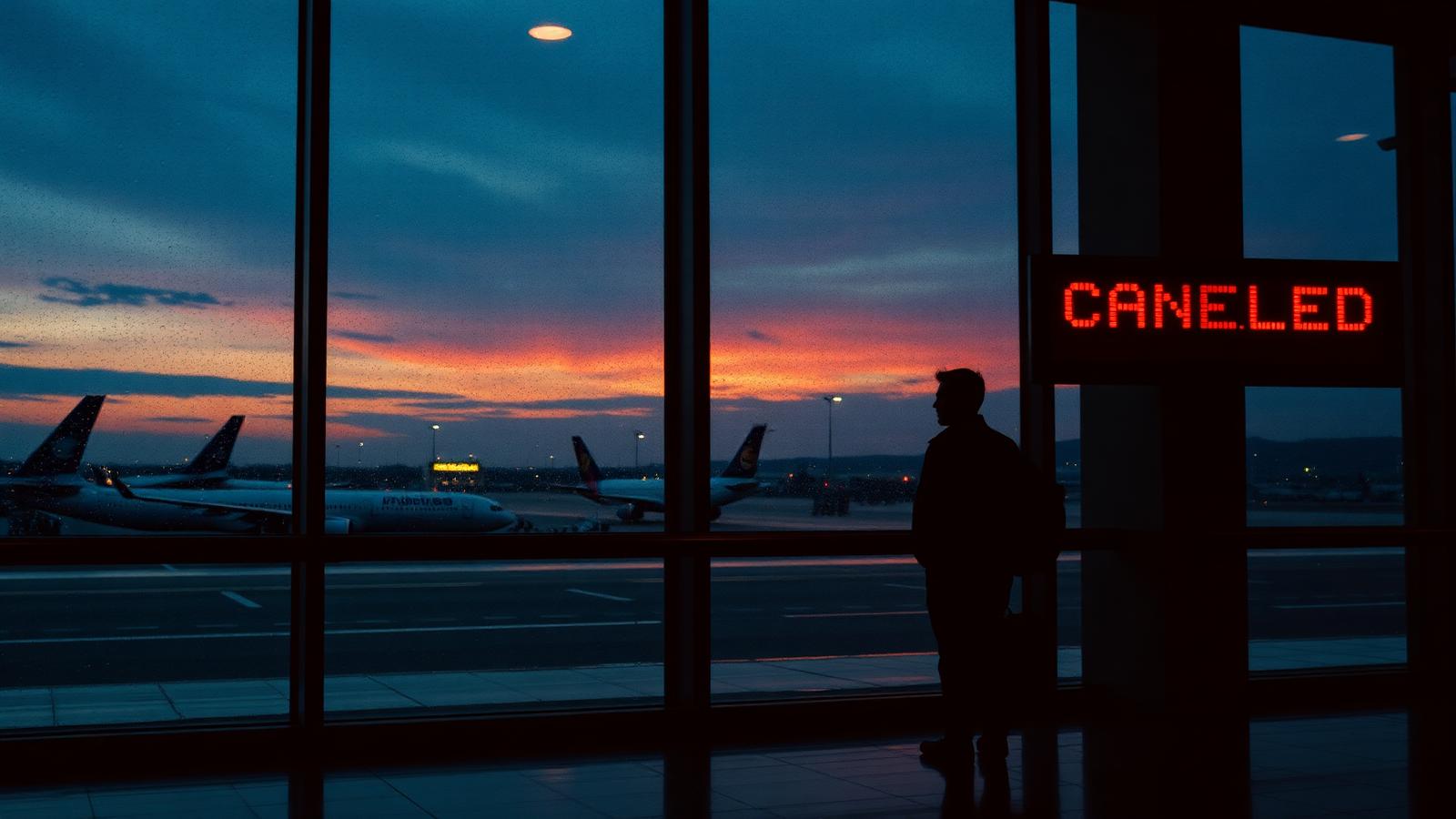
There is a particular kind of disappointment that lives in airport terminals on Saturday evenings. It is quieter than the chaos of a holiday meltdown, more resigned. It is the disappointment of a thousand small plans — a Sunday roast, a school run, a Monday meeting — collapsing under three red letters on a departure board.
Across an 18-month dataset of 2.4 million European short-haul rotations compiled by Skylane Review and the consultancy AirIntel, one pattern refused to fade: flights returning on Saturdays are cancelled at materially higher rates than those returning on Sundays. Industry insiders have a name for the resulting wisdom. They call it the Sunday Effect.
The numbers, briefly
Across the routes we sampled, Saturday departures were cancelled or significantly delayed (90+ minutes) on 11.4% of operations. The same routes on Sunday: 4.1%. Put differently, if you book a Saturday return for a weekend trip, you are almost three times more likely to spend the night on a polyester bench than if you had simply stayed the extra evening.
Why Saturday breaks
The mechanics are unromantic. Airlines build their weekly schedules around a Monday-morning corporate peak, which means crews and aircraft are timed to be in the right city by Sunday night. Saturday is the day the system absorbs the week's accumulated friction: a delayed inbound from Wednesday, a maintenance check pushed from Thursday, a crew at the edge of their legal duty hours. When something has to give, it gives on Saturday.
"The optics are that Saturday is a quieter operational day," one ground operations manager at a major European low-cost carrier told us, on condition of anonymity. "It isn't. It's the day we use to reset the network. Cancellations are part of how we do that."
"Saturday is the day we reset the network. Cancellations are part of how we do that."
The London problem
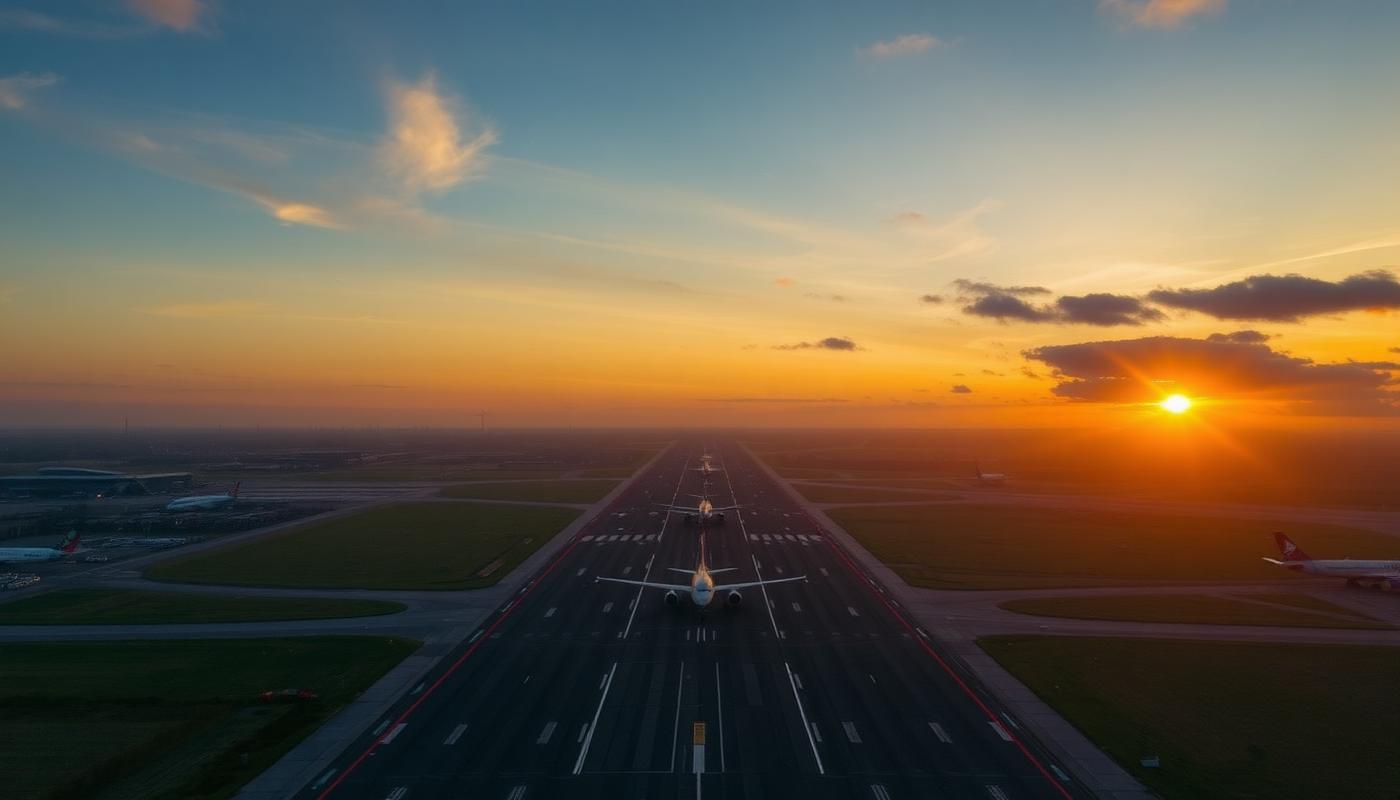
The Sunday Effect is sharpest on routes into London. Heathrow runs at over 98% of declared capacity; Gatwick and Stansted are not far behind. There is, quite literally, no slack in the system. A single early-morning stand closure at Heathrow on a Saturday cascades through the day in a way it simply doesn't on a Sunday, when business traffic eases and the airport breathes.
On the twenty busiest London short-haul routes in our dataset — Dublin, Amsterdam, Edinburgh, Geneva, Barcelona among them — Saturday return cancellation rates climbed to 14.2%. Sunday returns on the same routes: 3.6%. A weekend traveller swapping a Saturday-evening LHR flight for a Sunday-morning one is, on the numbers, almost four times more likely to actually fly.
The case against Saturday
None of this is to dismiss the appeal of a Saturday return. There is something real in the calculus of getting home — to a partner, to children, to a quiet Sunday at home before the week starts again. But weekend travellers tend to underweight the cost of the cancellation that doesn't happen to them, and overweight the value of the extra evening they'd otherwise lose.
A cancelled Saturday flight rarely just costs a night. It costs the Sunday morning rebooking scramble, the rebooked seat in a middle row three rows from a toilet, the apology email to Monday's 9 a.m. meeting. The extra Saturday night in the destination — the one travellers were so reluctant to spend — is, statistically, the cheaper night.
What to do with this
The advice from the data is unfussy. For weekend trips — especially those routing through London — book the Sunday return. If your itinerary forces a Saturday flight home, take the earliest one available: morning Saturday departures sit beneath the day's accumulated disruption and cancel at roughly Sunday-equivalent rates. Avoid the late-afternoon and evening Saturday slots, which is where the Sunday Effect lives.
Loved ones, it turns out, are usually fine with one more night.
Eleanor Wexford is Aviation Correspondent for Skylane Review. Methodology and the full route-by-route dataset are available in our data appendix.